


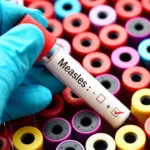
South Carolina’s measles outbreak continues to intensify, with state health officials confirming 88 additional infections this week, pushing the total to 646 cases since October. The South Carolina Department of Public Health said the vast majority of cases remain concentrated in the Upstate region, particularly Spartanburg County near the North Carolina border.
Health authorities have identified numerous public exposure sites tied to the outbreak, including elementary and secondary schools, two grocery stores, a Publix supermarket, the South Carolina State Museum, and college campuses. Clemson University reported that 34 students are currently quarantined, while Anderson University has placed 50 students in quarantine following confirmed exposures. The department has posted specific dates and times of potential exposure events on its website.
The expanding outbreak has added to growing concern among public health experts that the United States may be at risk of losing its measles elimination status. The World Health Organization defines measles elimination as having “no locally transmitted measles infections or outbreaks lasting 12 months or longer.” The U.S. achieved that benchmark in 2000, but sustained outbreaks in recent years have raised doubts about whether it can be maintained.
In 2025, the U.S. recorded more than 2,240 measles cases — the highest total in three decades — with many linked to a large outbreak in West Texas, according to the Centers for Disease Control and Prevention. So far in 2026, 171 cases have been reported nationwide as of Jan. 13, with updated figures expected later this week from the CDC.
Measles is among the most contagious viruses known and can lead to serious complications, including hospitalization and death. Public health officials note that declining vaccination rates have fallen below the herd immunity levels needed to prevent sustained transmission.
The Pan American Health Organization, the World Health Organization’s regional office for the Americas, is scheduled to meet in April to review measles elimination status for both the United States and Mexico. Canada lost its elimination status in November, nearly three decades after the disease was declared eliminated there.
Health officials stress that vaccination remains the most effective defense. One dose of the MMR vaccine is about 93% effective against measles, while the full two-dose series offers roughly 97% protection, according to the CDC. Vaccines are available through primary care providers, pharmacies, and local health departments.
People who believe they may have been exposed are urged to monitor for symptoms, which typically appear seven to 12 days after exposure, though they can take up to 21 days. Early signs include fever, cough, runny nose, and red, watery eyes, followed by a rash that usually begins on the face and spreads.
Anyone experiencing a fever of 101°F or higher with these symptoms should contact a health care provider before seeking in-person care so precautions, such as masking or isolation, can be arranged to limit further spread. Patients may be advised to remain at home until medically cleared.
Editorial credit: Jarun Ontakrai / Shutterstock.com